See all
No search result found
It looks like we couldn't find any results for your search.
Helpful links
Financial Maturity – the ‘Achilles Heal’ of Innovation Fund Applications
By far, the most common ‘fatal flaw’ for 2024 Innovation Fund submissions was the lack of financial maturity. Perhaps it shouldn’t be a surprise that the reason for the most failed applications happens to be the hardest condition to satisfy for a first-of-a-kind (FOAK) project. Afterall, the main issue lenders and investors have with a FOAK project is exactly what makes the project a ‘FOAK’ – it’s a first.
This challenge is revealed within two stages of the IF application review – during the Admissibility & Eligibility (A&E) assessment (i.e., the screening test before applications are accepted for evaluation) and during the application evaluations.
See below

Admissibility & Eligibility Stage
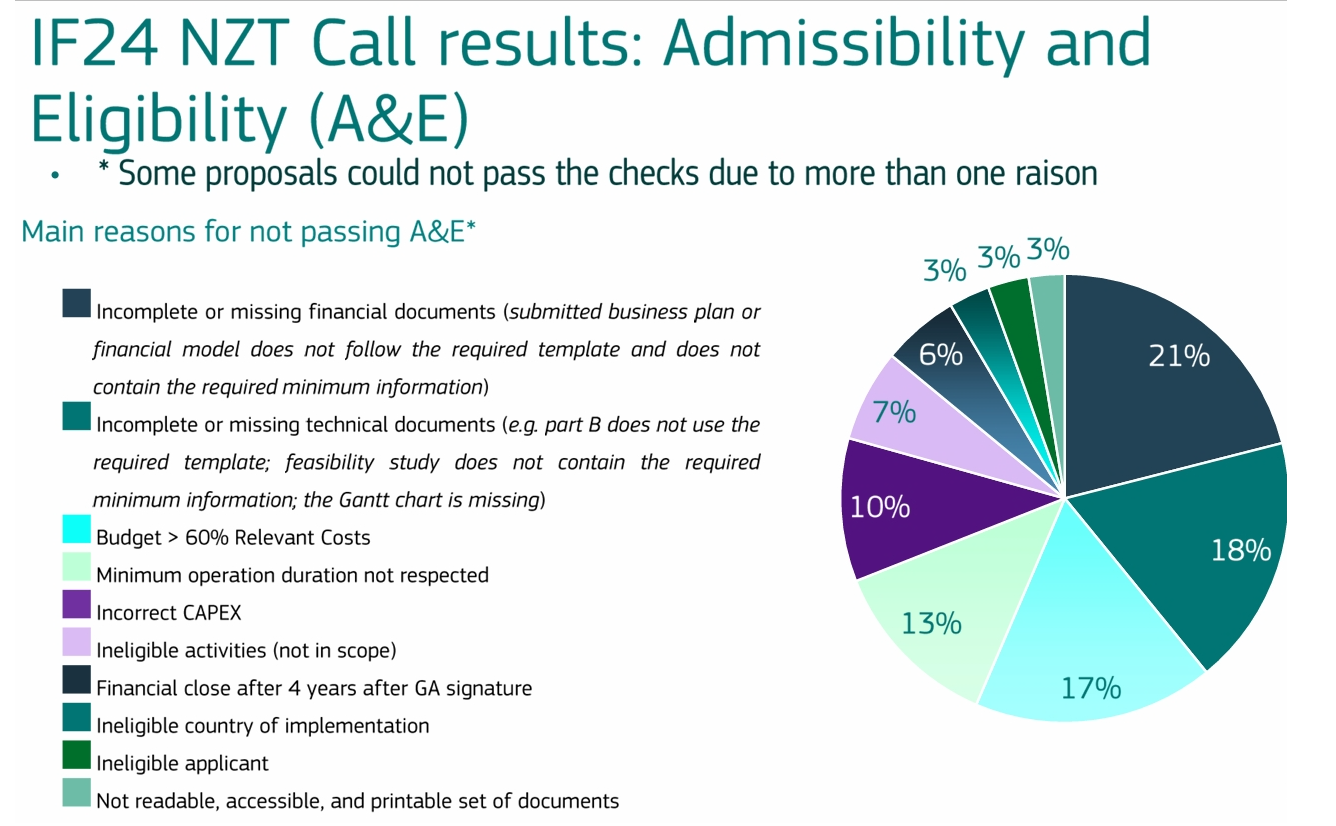
At the Admissibility & Eligibility Stage, 68 (19%) of the 359 submitted application failed to meet the eligibility criteria and therefore, were excluced from further evaluation.
A closer look reveals that 54% of the 68 were screened out because of insufficiencies within the financial documents (e.g., incorrect CAPEX, excessive budget), which means 36 (10% of the 359) applications did not pass the A&E stage due to deficiencies within the financial and business plans.
Of the 291 applications that passed the Application Evaluation Stage stage, 92 – or 32% of the evaluated applications - failed to meet the IF’s evaluation criteria for financial maturity. As shown below, the lack of financial maturity was, by far, the most common reason for failed applications.
This means that, of the 359 submitted applications, 128 – or 36% - were excluded or failed due to insufficiencies within the financial section of their submissions. While this indicates the most common challenge for FOAK projects, it also identifies the area of opportunity, where applicants can most significantly strengthen their application’s chance of success. 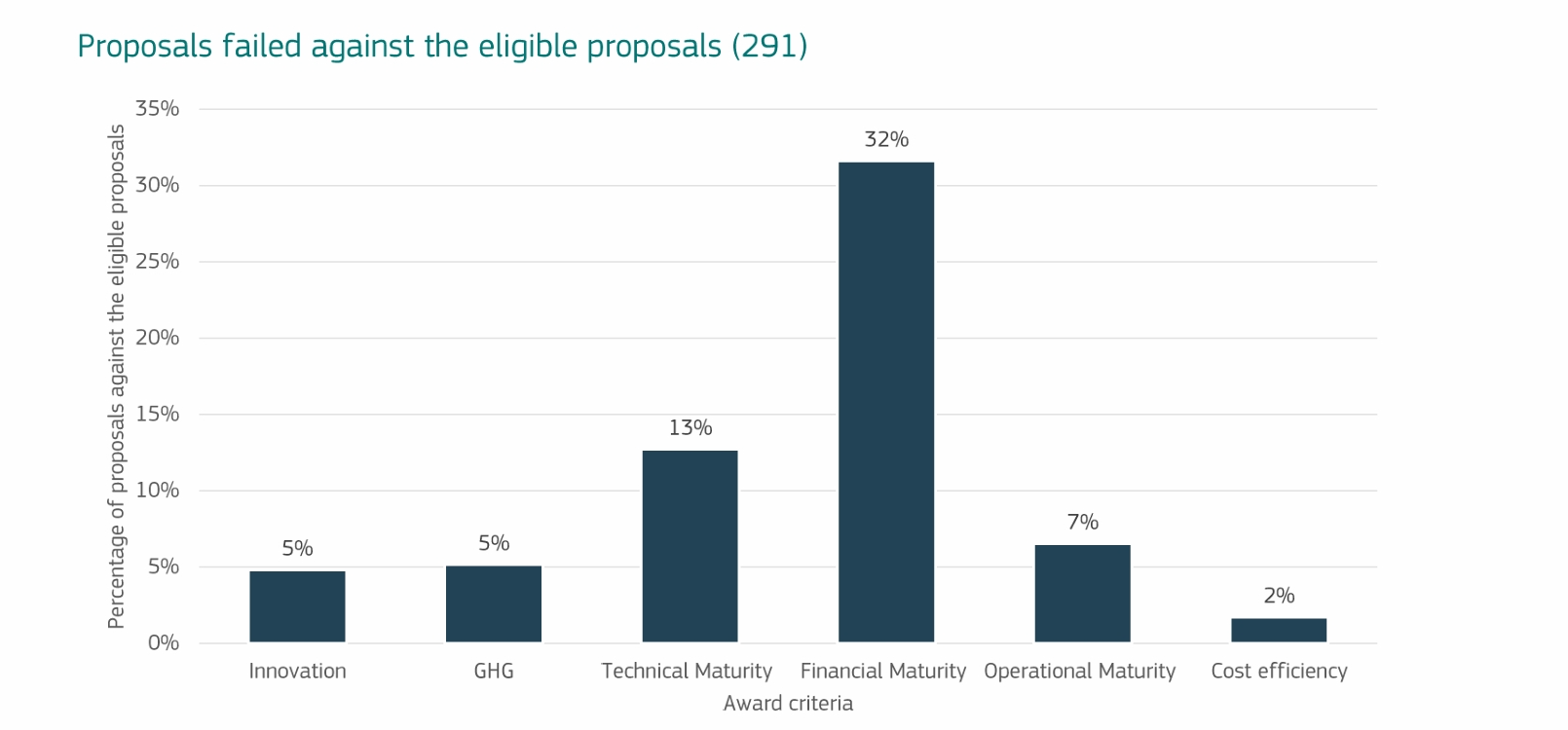
Demonstrating financial maturity means much more than providing evidence that project financing is in place with LOIs or identifying financial partners.
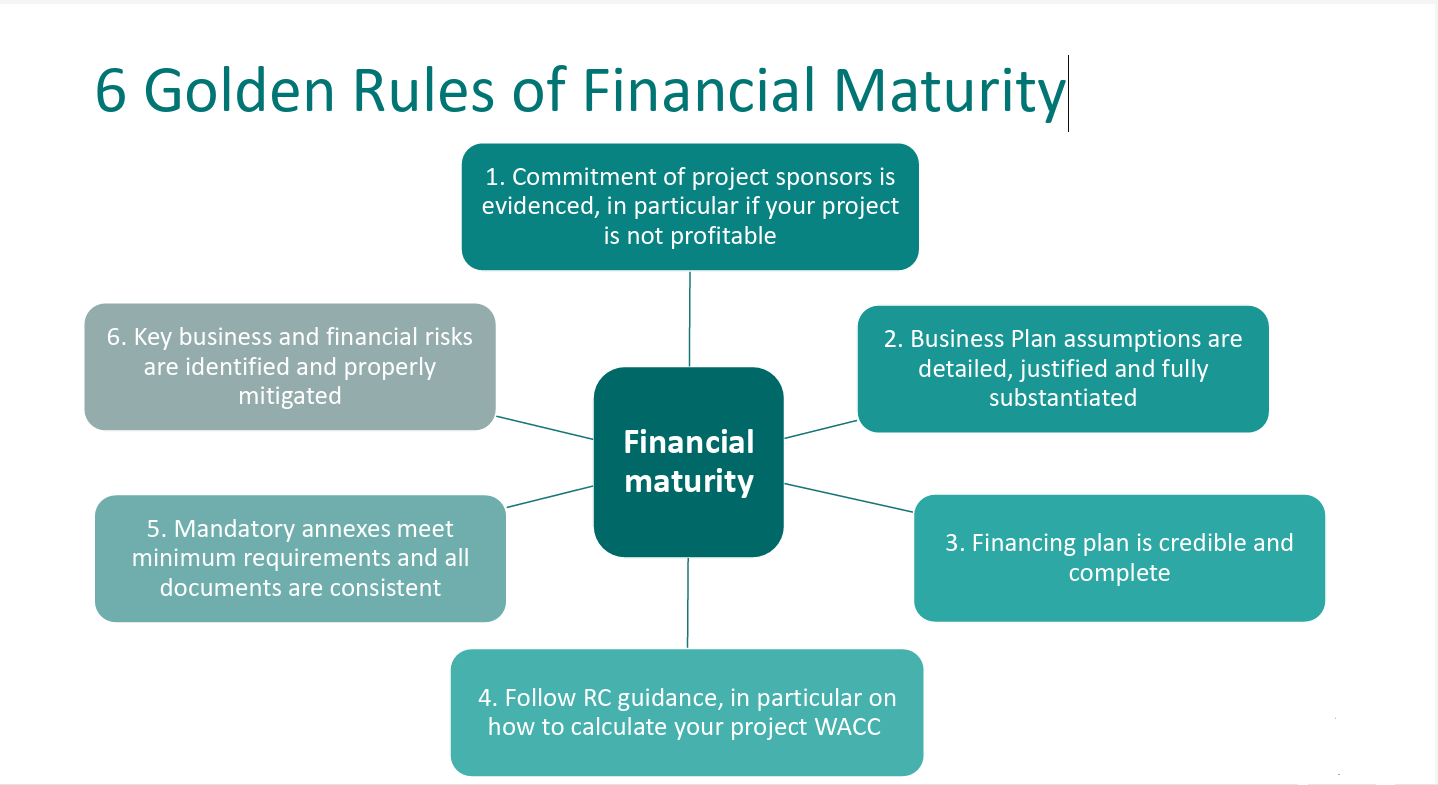
Below in the 6 Golden Rules of Financial Maturity overview, it entails close attention to macro-level strategy, by building solid, credible business and financing plans, identifying and addressing risks, along with securing commitments from key project sponsors and offtakers, all while focusing on the micro-level details, such as maintaining consistency throughout the application documents and complying with the proper calculation methodologies within the financial model.
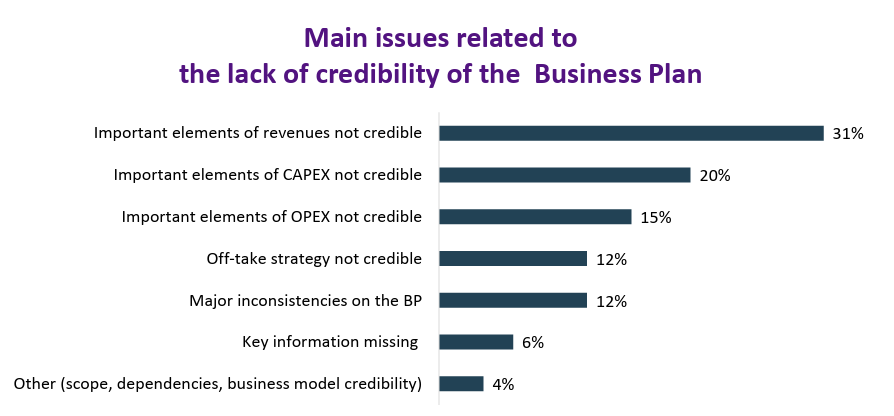
According to CINEA, the predominant issue with insufficient Business Plans was a lack of credibility. In fact, a lack of credibility accounted for 78 percent of Business Plan insufficiencies, as reflected below.